20 Early Science Coloring Pages
Turn a science idea into a clear hands-on activity with printable early science coloring pages. Each page focuses on one learning goal—such as plant growth, weather, magnets, floating and sinking, the five senses, life cycles or simple forces—so adults know what to observe and discuss.
Filter this collectionAudience, difficulty, and focus+


Use a science picture to notice and ask questions
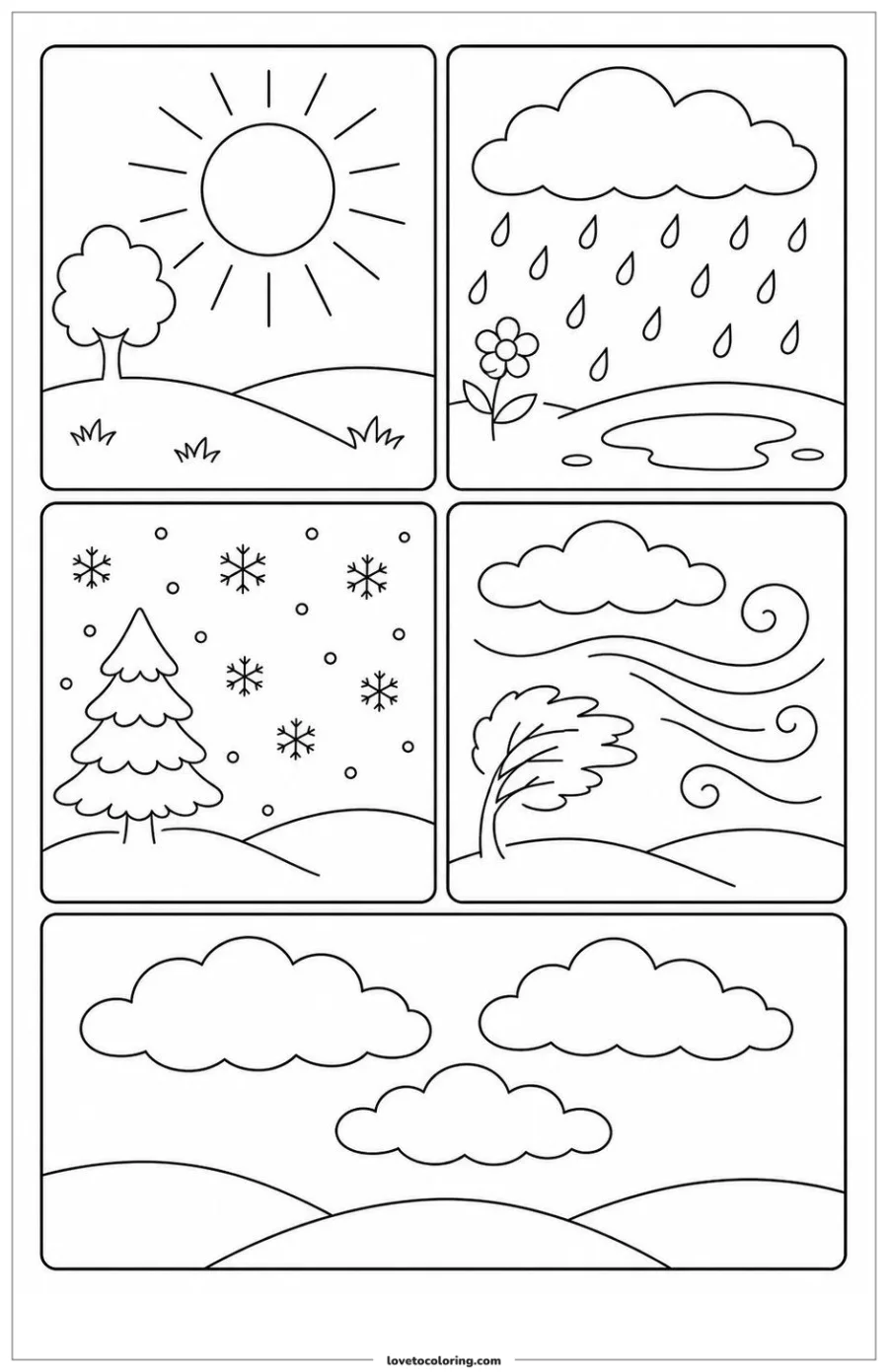
Weather, plants and other early-science scenes can start an observation conversation. Check teaching explanations against a trusted reference rather than treating the illustration as a diagram.
Write an observation caption
Color a page and finish the sentence “I notice…” using a detail visible in the drawing.
Compare two stages or conditions
Choose two related scenes and describe what changes, using adult guidance for the science explanation.
Keep a question notebook
Write one question beside a finished page and look for an answer together in a suitable reference.
Use color to separate parts
Choose a small palette to make the main object and its surrounding details easy to distinguish.
Build a picture around one classroom question
Choose one subject and one observable moment, then set the detail level for your learners. Review the generated content before using it to explain a science concept.
Weather Symbols Matched to Five Simple Outdoor Conditions
- 1
Choose one clear idea
Start with the subject and the visible action or pattern you want, then add only the setting details you need.
- 2
Set up the printable
Open the matching generator and review its style and detail options. Adjust the idea for the person who will color the page.
- 3
Check before printing
Review the result and any important letters, shapes or teaching details. Download a version you are happy to use.
Generation options, credit costs and download choices are shown in the tool.
Choose another starting point for your next page
Use a new idea for another printable, or start with line art when you want to explore a color direction.
Make a name or word page
Enter a name, word or short phrase for a different kind of personal printable project.
Create a word page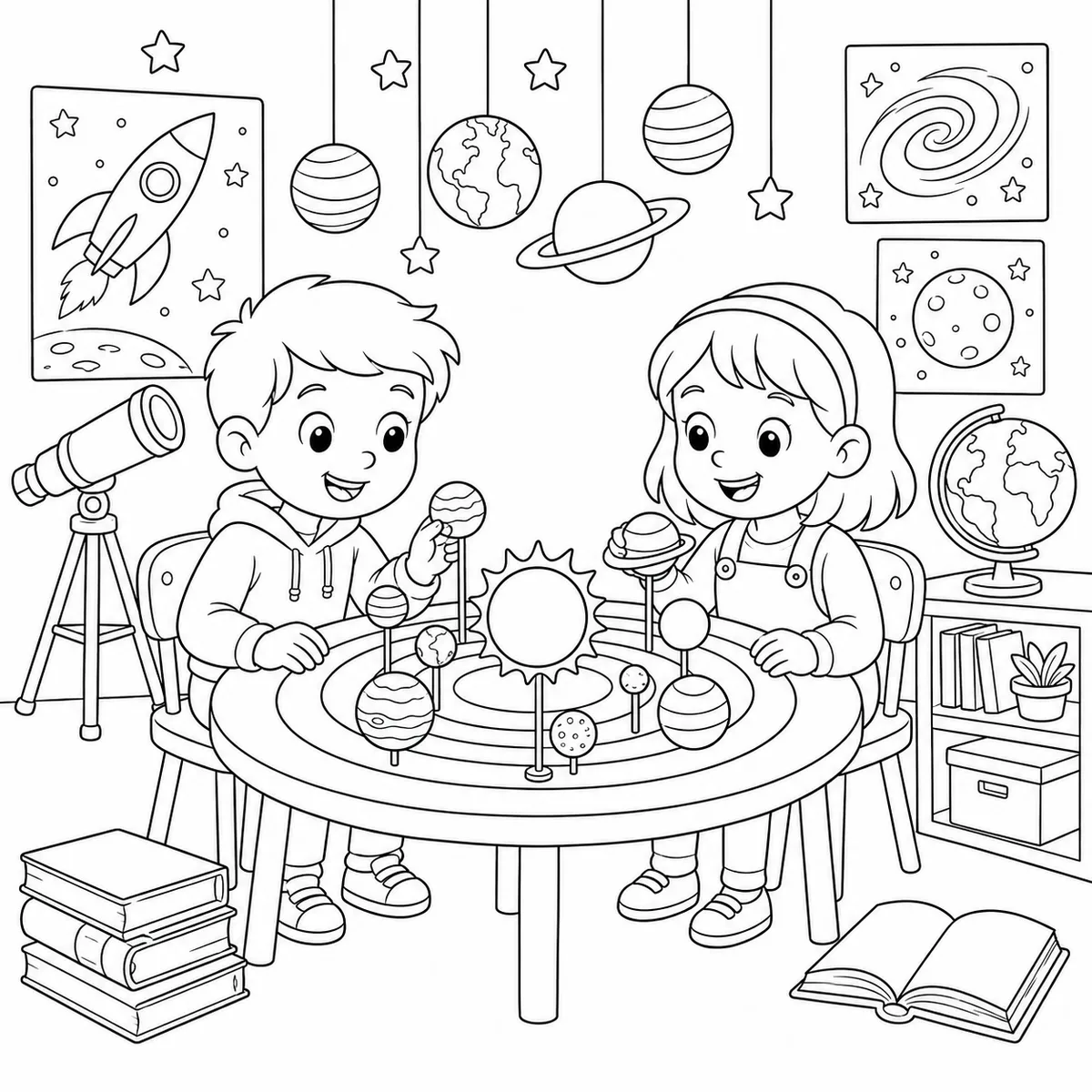
Explore colors before picking your pencils
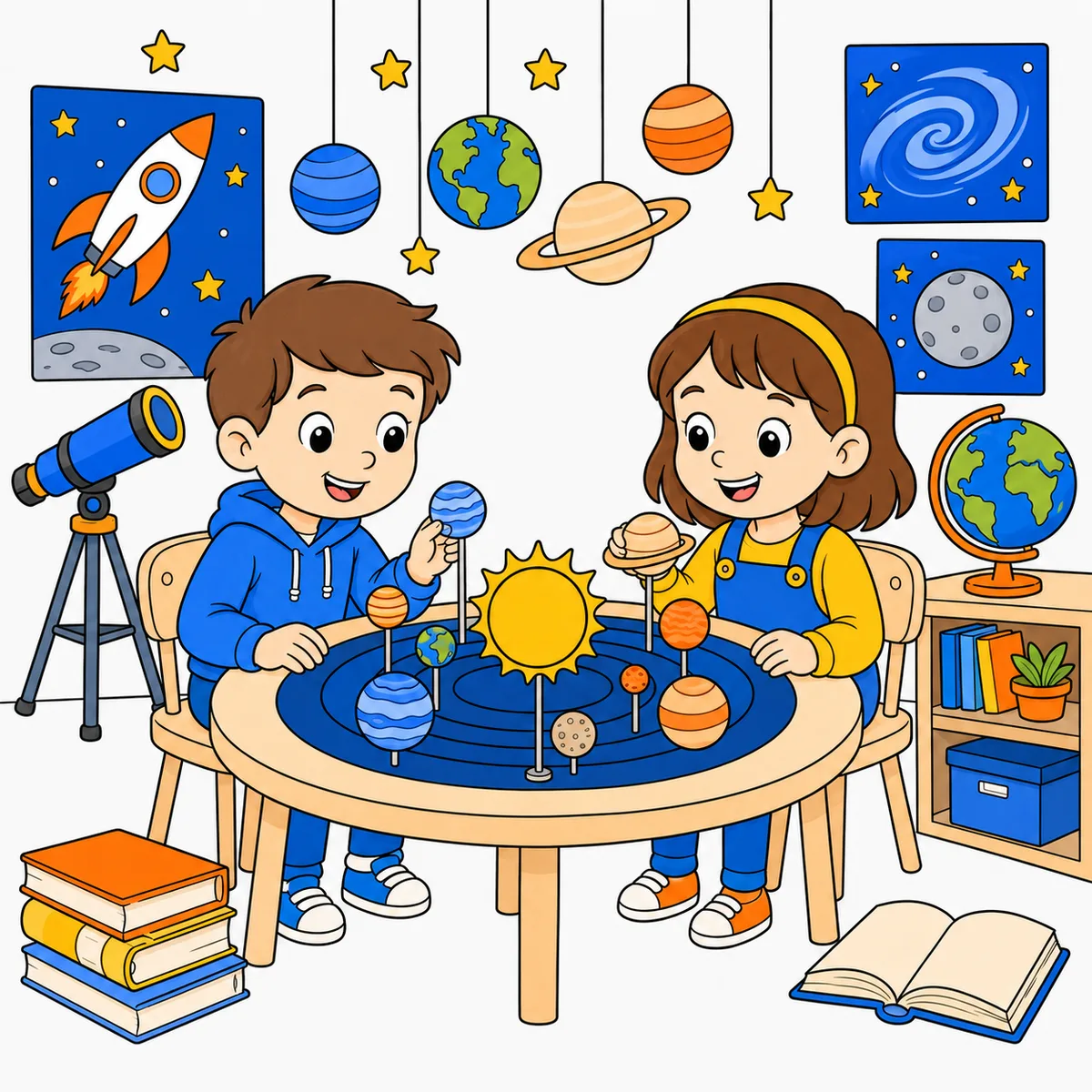
A classroom space activity scene is shown in line art and color as a tool example. Open the tool with your own drawing to explore a different color direction.
Try the coloring page colorizerEarly Science Coloring Pages - What This Collection Includes
These early science coloring pages turn one visible idea into a short observation activity. The 20 published scenes cover plant growth and water transport, weather, magnets, floating and sinking, the five senses, frog life cycles, sound, ramps, day and night, and push-and-pull forces.
Use Observe & Classify for sorting and comparing, One Science Idea for a focused object or force, Cycles & Change for growth and life stages, and Experiments & Practice for simple setups children can discuss at home or in class. Each detail page includes an observation prompt so adults know what to ask after coloring.
The pages suit preschool, kindergarten, early elementary, homeschool and classroom science centers. Every published detail page opens a high-resolution PNG with Print and Download controls. Print in portrait on A4 or US Letter using Fit to printable area; the collection does not claim a bundle PDF.
How to Print These Coloring Pages
Open any published detail page to view the line art and download its high-resolution PNG. Print in portrait orientation on A4 or US Letter paper and choose Fit to printable area.
Choose a printable page
Browse the early science collection and open the design that fits your coloring session.
Download the PNG
Use the download action on the individual page to save its high-resolution PNG.
Set up the print
Print in portrait orientation on A4 or US Letter paper and choose Fit to printable area.
Color and keep it
Use crayons, pencils or markers, then display the finished page or use it in your activity.
Best Colors for Early Science Coloring Pages
Use these practical palette ideas with crayons, colored pencils or markers.
Clear Recognition Colors
Use distinct colors for the main letter, number, shape or science subject so it is easy to discuss after coloring.
Limited Practice Palette
Choose three to five crayons or pencils to keep the activity focused and manageable.
Helpful Contrast
Use a darker outline-adjacent color only on the key learning detail, not across every area.
Early Science Coloring Pages FAQ
Which early science topics are included?
The 20 pages include plants, weather, magnets, floating and sinking, the five senses, frog life cycles, sound, ramps, day and night, and simple forces.
How should I use a science coloring page?
Read the observation prompt, let the child color the visible parts and ask what they notice, compare or predict.
Are these pages suitable for preschool?
Yes. Start with broad, picture-based pages about one object, process or observation and use the prompt for a short conversation.
Can teachers and homeschool families print them?
Yes. Published pages are free PNG activities for classroom science centers, homeschool lessons and family learning.