Educational Coloring Activity Ideas: Six Ways to Learn Through Color
Updated 2026-09-01 · 7 min read
The six examples in this guide come from Love to Color's published Educational collection. Generated pages are starting points; review the final line art, labels, quantities and subject details before printing or sharing.
The most useful educational coloring activities give children one small idea to notice while they color: a letter, a quantity, a shape, a feeling, a life-cycle stage or a daily habit. Start with a ready-made page in the Educational collection, or make a focused classroom page with the teacher generator. Text and photo tools are useful when the lesson needs a different subject or a personal reference.
On this page
The workflow in three decisions
- 01Choose one learning goal before choosing a page: letters, counting, shapes, feelings, science or a daily routine.
- 02Keep the activity active by asking the child to count, name, trace, sequence or explain something—not only fill in colors.
- 03Use the published collection for a quick printable, or create a more specific page when the lesson or child needs a custom subject.
Choose by what you want to do next
You want a page for today
Browse the Educational collection and choose a letter, number, shape, science or healthy-habits page that already has a clear visual task.
Browse educational pages →You need a specific topic
Describe the age, subject and learning moment in the teacher generator. A text or photo workflow can help when the page should reflect a different idea or real object.
Create a classroom page →Start with one small thing to notice
A coloring page becomes more useful when the child has something specific to look for. That might be the sound at the start of a word, the number of objects on the page, the difference between a circle and a square, or the order of a plant's growth. You do not need to turn every page into a worksheet; one good question is enough.
For a ready-made activity, the Educational collection is the quickest place to start. If today's lesson has a narrower topic, use the teacher generator to describe the subject, age and format. The general text tool is helpful for an imagined scene, while the photo tool can turn a real object or observation into line art.
Browse the Educational coloring page collection · Create a classroom worksheet
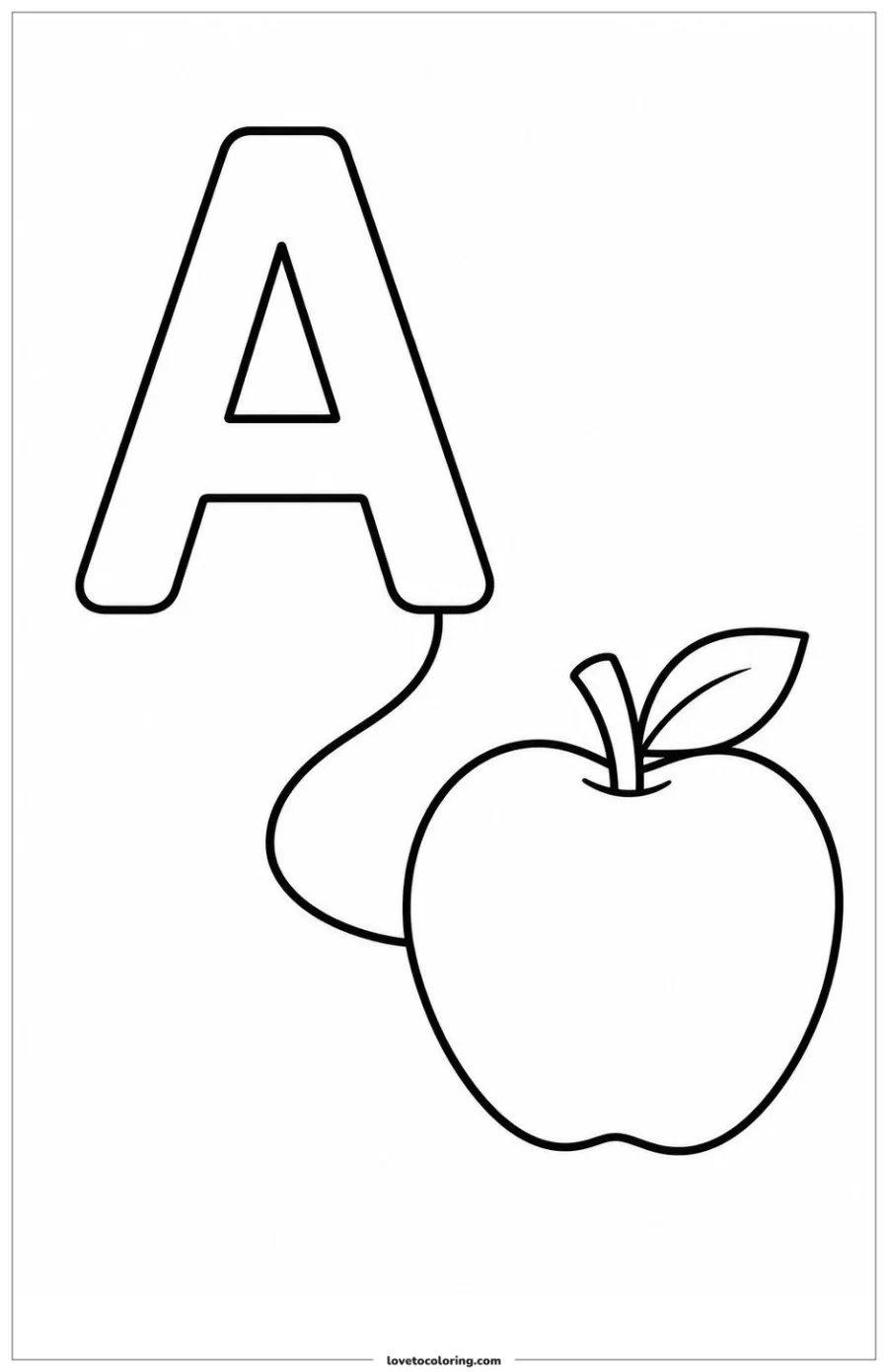
Letter A and an apple for early word practice
This page gives the child one letter, one familiar object and a simple path between them. Before coloring, say the letter sound and ask what the picture is. Afterward, the child can trace the curved path with a finger or pencil and name another word that begins with the same sound.
The page stays readable because the A and apple are large. That matters for a first literacy activity: the child can focus on the connection instead of searching through a crowded illustration. If you make a custom version, keep one target letter and two or three clear picture clues.
Find more educational pages · Create a custom letter page
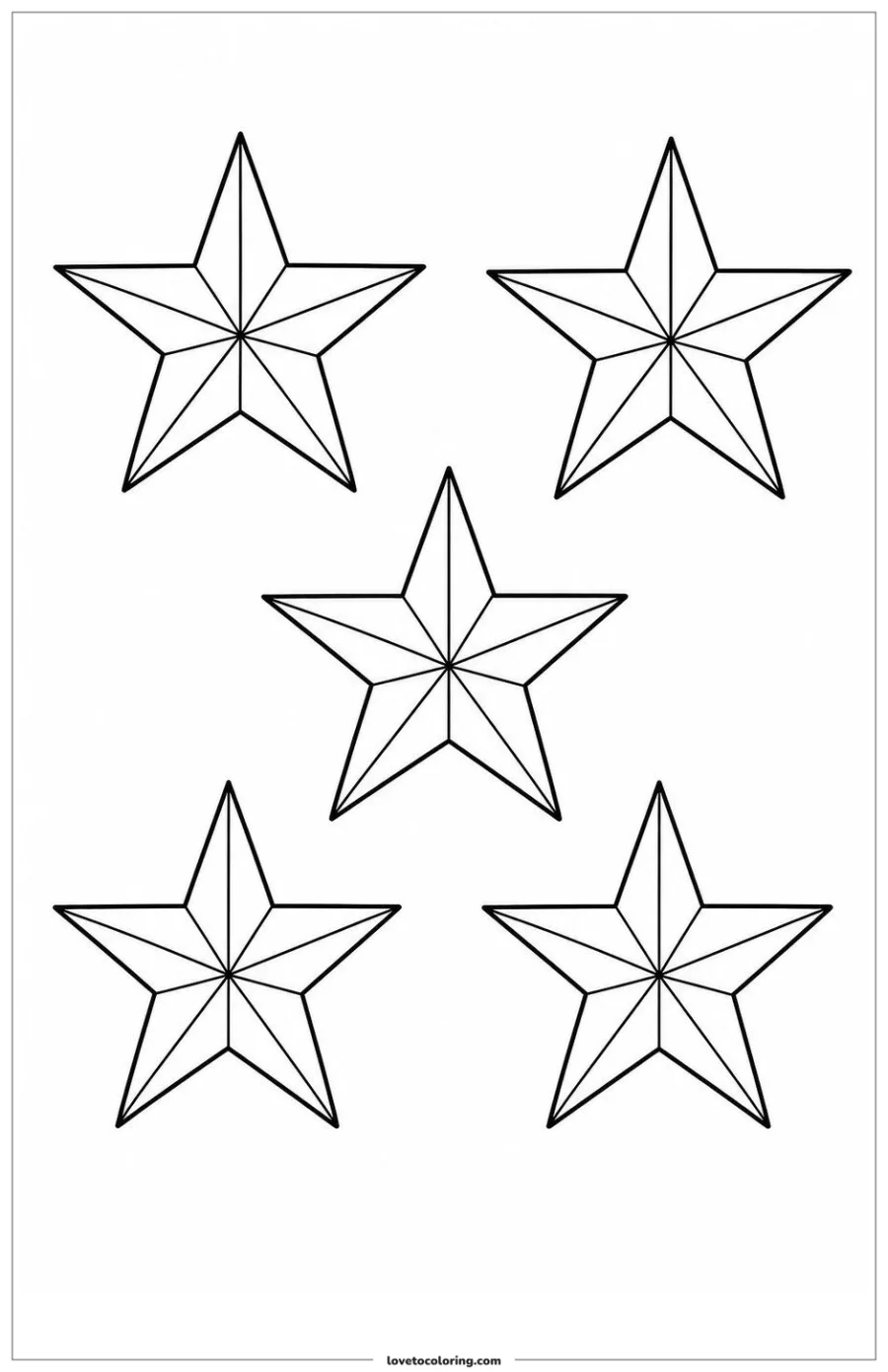
Five stars for counting before coloring
Counting works well when the objects are separated enough to touch or point to one at a time. With this five-star page, ask the child to count slowly, touch each star once and tell you the final number. Then let them choose whether all five stars match or each one gets a different color.
That short sequence—count, say, color—keeps the learning goal visible without making the page feel like a test. For a younger child, stop at a smaller group. For a class activity, invite students to draw or find another group of five after they finish.
Browse printable learning activities · Make a custom counting page
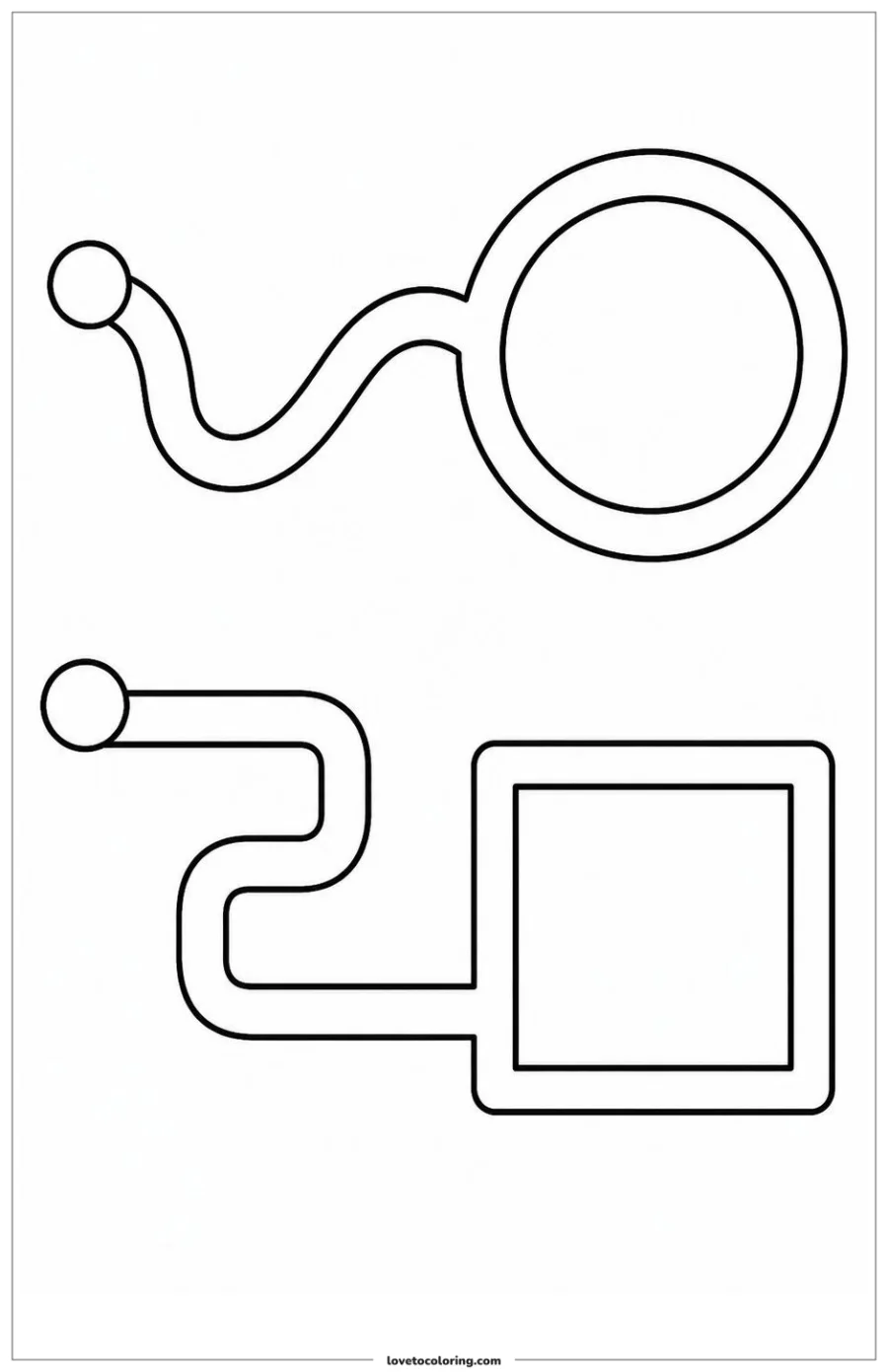
Circle and square paths for shape and pencil control
A shape page can do two jobs at once. The child names the circle and square, then follows each path from one end to the other. The paths offer a small amount of pencil-control practice while the destinations give the movement a reason.
Keep the conversation concrete: “Which path turns more?” or “What shape is at the end?” You can color the shapes afterward or use two colors to show which path was easier to follow. If a custom page is needed, ask for a few large shapes and wide, clearly separated paths rather than a full maze.
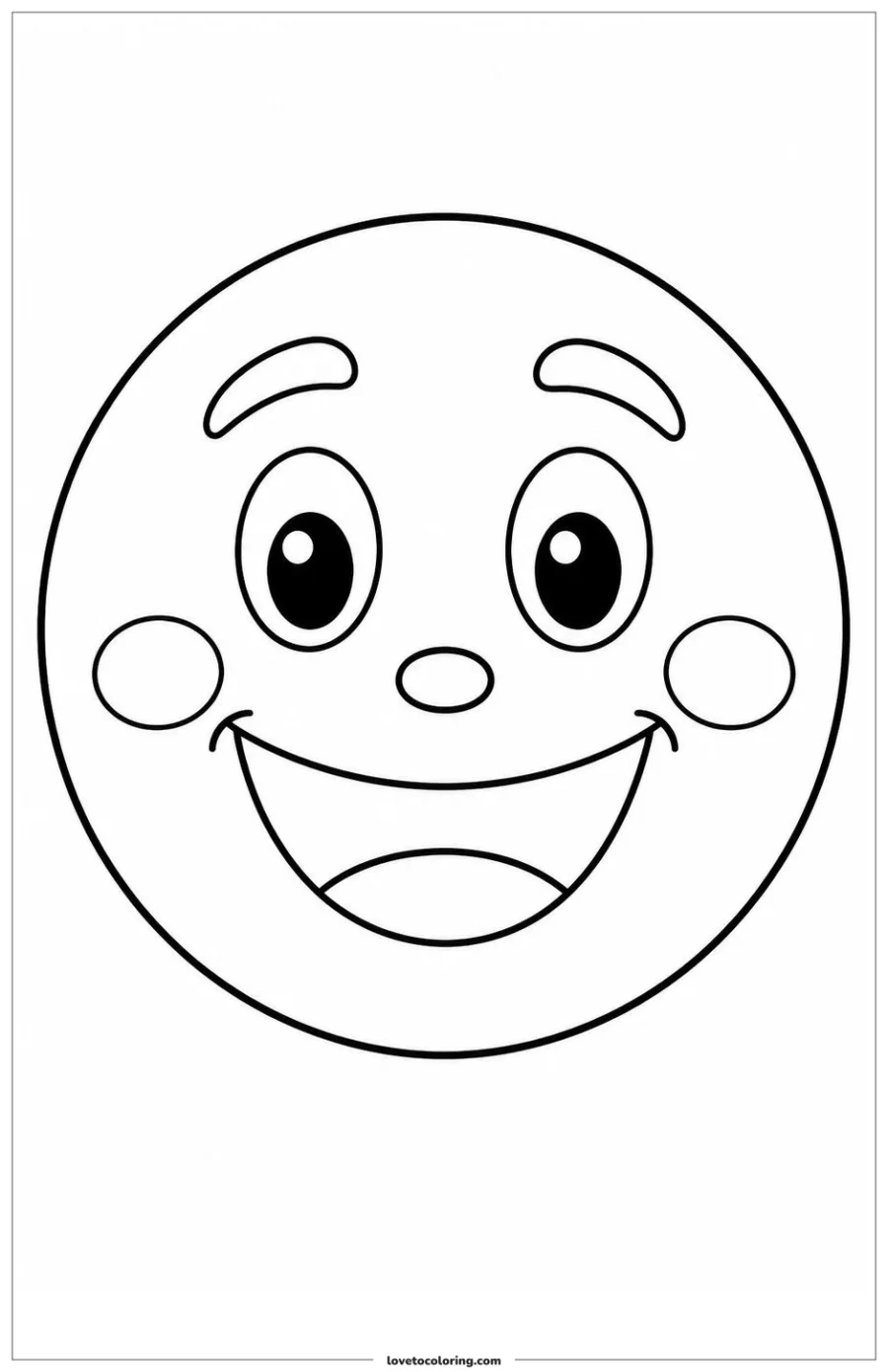
A happy face for a simple feelings check-in
A feelings page is most helpful when it opens a conversation rather than asking for a correct answer. Let the child color the smiling face, then ask when they have felt happy or what details show the face is smiling. In a group, children can share only what they are comfortable sharing.
The broad face and open regions leave room for a calm activity. You can pair it with a story, morning meeting or transition. Avoid assigning a feeling to a child based on a picture; use the page as an invitation to name feelings and notice facial cues.
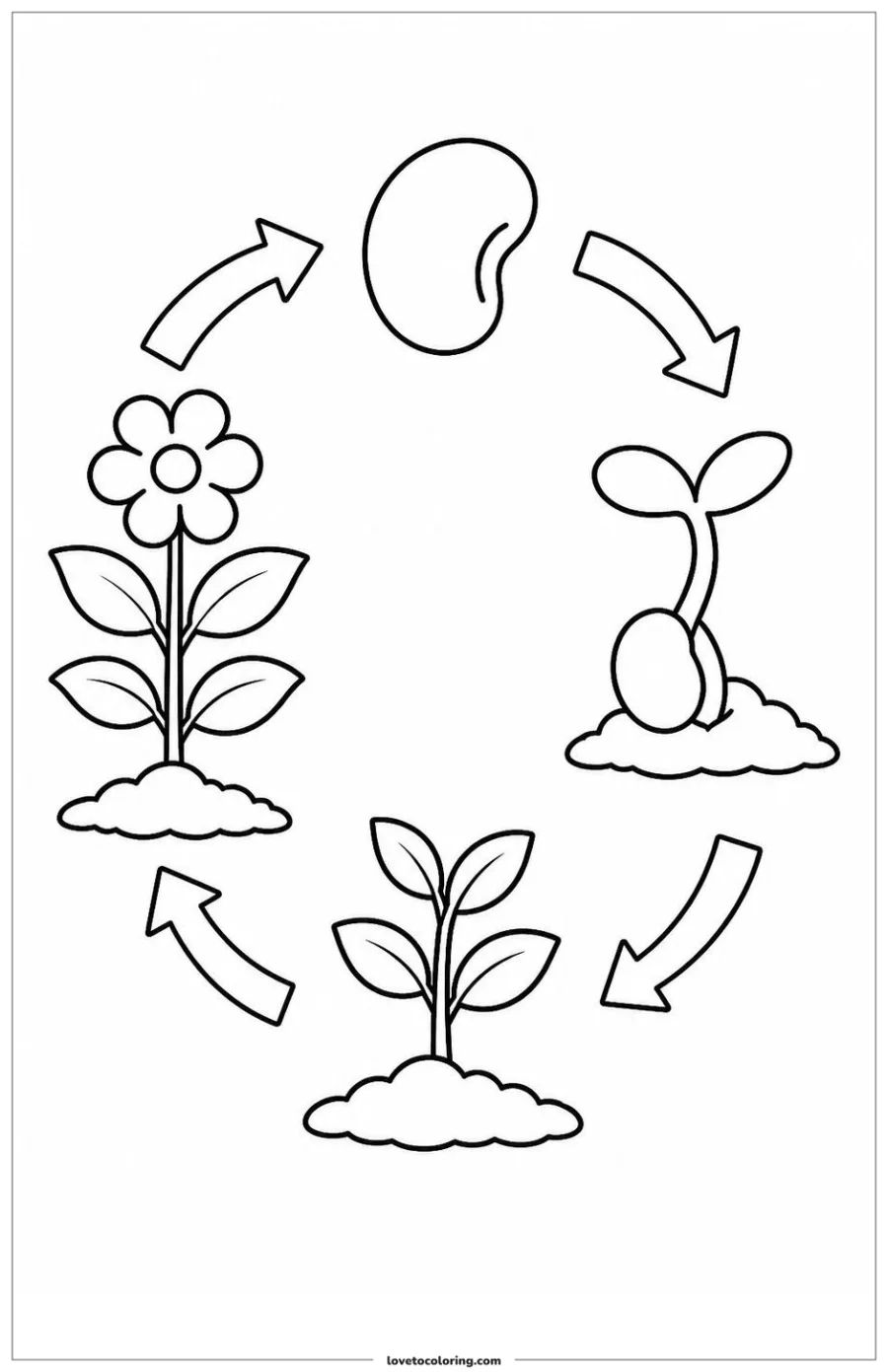
A plant life cycle for looking at change over time
This plant page is a natural fit for a science conversation because the stages are shown in sequence: seed, sprout, growing plant and flower. Ask the child what changed from one stage to the next, then trace the arrows before choosing colors for the soil, leaves and petals.
It also works well beside a real classroom plant or a seed the child has planted. The page is a picture prompt, not a replacement for observation. If you create a custom science page, name the stages you want to see and check that the order and details are correct before using it in a lesson.
Browse more science coloring activities · Turn a real plant photo into line art
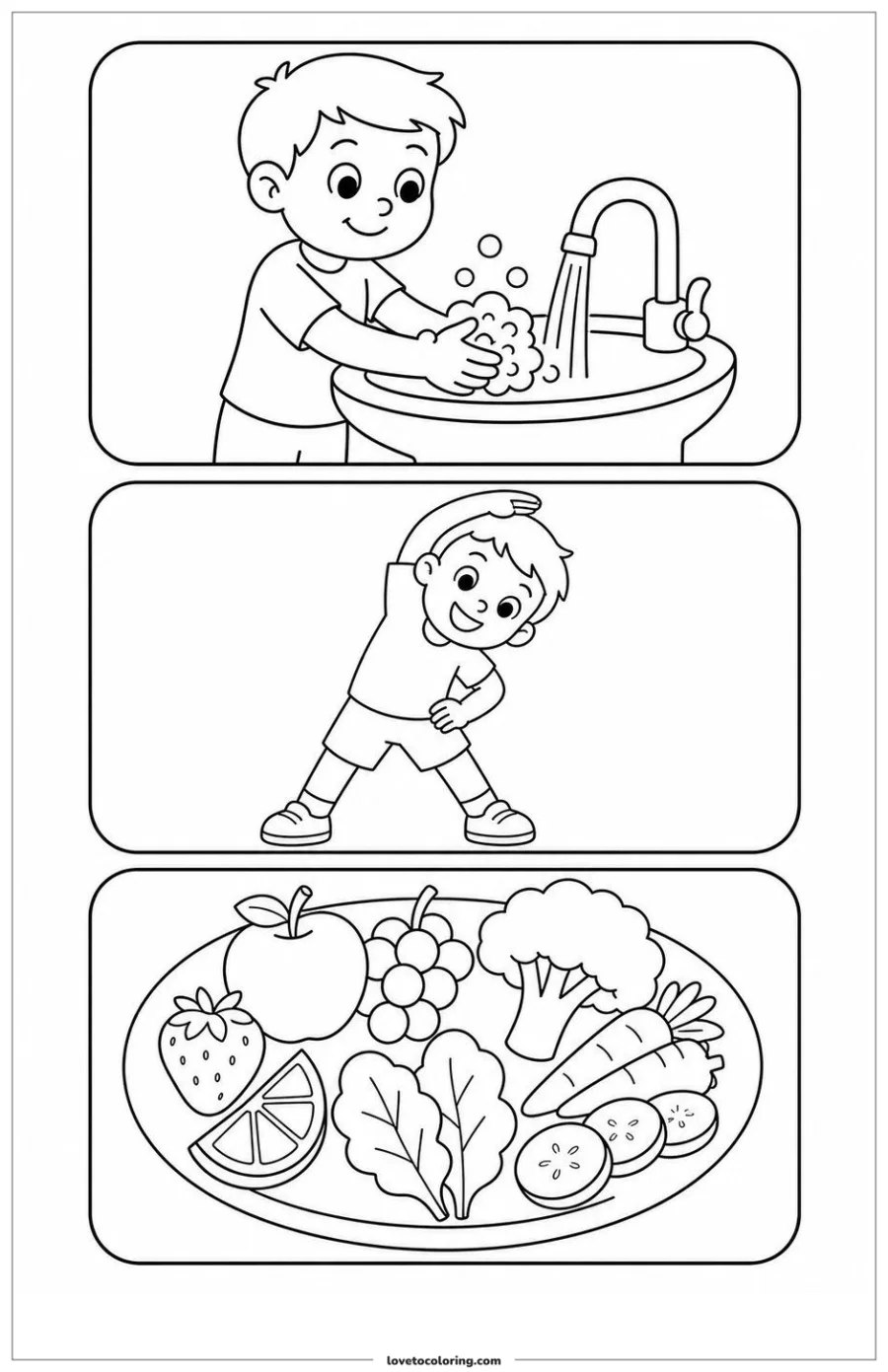
Healthy habits as three everyday picture prompts
A routine is easier to talk about when it is shown in familiar actions. This page pairs handwashing, movement and healthy food in three separate panels. A child can color one panel at a time and explain what is happening, or put the panels into a simple morning or school-day conversation.
Keep the tone practical rather than prescriptive. Ask what the child already does, what tools they recognize and which panel they want to color first. For a custom activity, choose one routine and a few recognizable objects so the page remains useful at print size.
How to make a custom educational coloring page
When the published collection is close but not quite right, start with the learning goal and the student task. A useful request might be: “Create a kindergarten plant-life-cycle coloring worksheet with four clearly separated stages, large simple line art and no crowded background.” The point is to describe what the child should see and do, not to fill the prompt with decorative adjectives.
Use the teacher generator when grade, subject and classroom format matter. Use the text tool for a free-form scene, or the photo tool when a real plant, classroom object or observation should be the visual reference. Review the result for recognizable subjects, correct sequence, spelling, quantities and lines that close cleanly before printing.
- Name one learning goal and one student action.
- Choose the age or grade before adding extra detail.
- Ask for large, separated shapes when the page is for younger children.
- Check labels, counts, facts and visual order on the final PNG.
Open the teacher coloring page generator · Create an educational page from text · Create one from a photo
Step by step
- 01Choose the learning goalPick one thing to notice: a letter, quantity, shape, feeling, sequence or daily routine.
- 02Choose a starting pageBrowse the Educational collection for a ready-made page, or open a generator for a more specific lesson.
- 03Match the page to the childUse simple, broad regions for younger colorers and add detail only when it serves the activity.
- 04Ask one useful questionInvite the child to count, name, trace, compare, sequence or explain something on the page.
- 05Review, print and useCheck the image at print size, then download and use it as a calm activity, lesson prompt or take-home page.
FAQ
What are educational coloring activities?
They are coloring activities built around a small learning idea, such as letter recognition, counting, shapes, feelings, science sequences or daily routines. The best ones give the child something to notice or discuss while coloring.
Which educational coloring pages are good for preschool?
Start with one large subject, broad coloring regions and a simple task such as naming a letter, counting a small group or matching a shape. The child’s comfort with the page matters more than a strict grade label.
Can I make a custom classroom coloring worksheet?
Yes. The teacher coloring page generator lets you describe a lesson topic and choose classroom-oriented settings. Review the generated image before printing, especially for labels, quantities, spelling and subject details.
Can a photo become an educational coloring page?
Yes. A clear photo of a plant, classroom object or observation can be turned into line art. Use it as a visual prompt and check that the important subject remains recognizable after conversion.
How should I print educational coloring pages?
Download the full PNG, choose portrait A4 or US Letter paper and use Fit to printable area. Print one test page first if you are using markers, heavier paper or a classroom printer.