Deep Space Blues
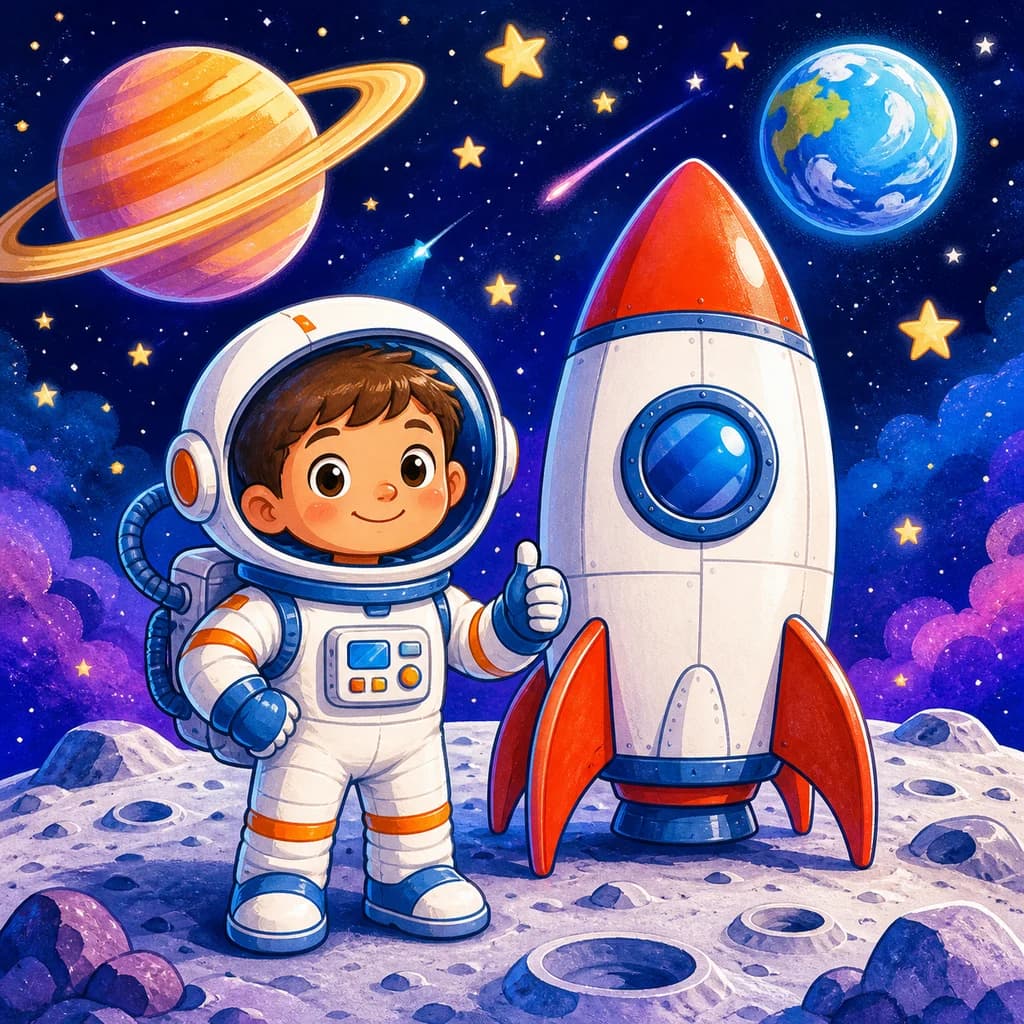
Layer navy, violet and black lightly around planets or spacecraft, keeping highlights open.
Look up, then choose where the observation happens. This astronomy collection pairs telescopes and observatories with dark-sky hills, mountain platforms, classroom stations and clear celestial targets.
Clear one filter or return to the full collection.
Show all pagesThese astronomy coloring pages are about observing space, not repeating the same rocket-and-planet picture. A telescope, dome, star chart or viewing terrace gives each scene a different reason to look closely.
Elementary children can name a telescope, observatory, Moon or comet while they color. Older kids may enjoy the engineering details of a tripod, dome slit or maintenance panel, while younger learners can start with one large instrument against an open sky.
The artwork is delivered as individual high-resolution PNG files. Print a page for a science station or download one for home; the collection does not claim to include a bundled PDF.
Choose a single telescope and open sky for a first science activity, then move to observatories, star charts and equipment details for older or more curious learners.
The collection covers telescopes, observatories, comets, the Moon, star fields, viewing platforms and recognizable astronomy equipment. The scenes support observation vocabulary without presenting invented scientific claims.
Open an individual page to view the line art, then download its high-resolution PNG. Print in portrait orientation on A4 or US Letter paper and choose Fit to printable area. Standard paper works for crayons and colored pencils; heavier paper is useful for markers.
Browse the astronomy collection and open the design that fits your coloring session.
Use the download action on the individual page to save its high-resolution PNG.
Print in portrait orientation on A4 or US Letter paper and choose Fit to printable area.
Use crayons, pencils or markers, then display the finished page or use it in your activity.
Use these practical palette ideas with crayons, colored pencils or markers.
Layer navy, violet and black lightly around planets or spacecraft, keeping highlights open.
Use gray, tan and muted red for craters, rock surfaces and distant worlds.
Reserve yellow, white or a single bright color for stars, controls and small points of focus.
Once the coloring is done, use the finished page to continue the creative moment.
Invite the child to name the main subject or setting before coloring.
Offer one easy page and one more detailed page so each learner can choose a comfortable challenge.
Use the scene as a short conversation starter, then let the child make their own color choices.
Yes. Each published page is available as an individual high-resolution PNG for personal, family, homeschool and classroom use.
The collection covers telescopes, observatories, comets, the Moon, star fields, viewing platforms and recognizable astronomy equipment. The scenes support observation vocabulary without presenting invented scientific claims.
Choose a single telescope and open sky for a first science activity, then move to observatories, star charts and equipment details for older or more curious learners.
Download the PNG, choose portrait orientation, select A4 or US Letter paper and use Fit to printable area.
Yes. The pages work for a short lesson, a quiet station, a family activity or independent practice without requiring an account.